ROI of Home Remodeling in Tempe: How to Estimate Your Payback
What Determines Remodeling ROI in Tempe
ROI is not one number, it is a decision
“Return on investment” sounds like a calculator outcome, but in real life it is a mix of economics and livability. In Tempe, your ROI depends on two separate things that often get blurred together.
First is resale value, what the market might pay for after the work is done. Second is how much the remodel improves your day to day, which can be hard to price but is still real. A kitchen that saves you time and makes the home feel right Phx Home Remodeling AZ can be worth more to you than the market will ever reimburse at closing.
The market rewards quality and consistency
Homes in the Phoenix metro do not all appreciate the same. Buyers tend to pay more for updates that look cohesive, use durable materials, and fit the home’s original layout. If a remodel looks like a patchwork, even if the materials are “nice,” it can cap your resale potential.
In Tempe specifically, buyers also notice indoor outdoor flow and practical upgrades, because the lifestyle matters here. A remodel that improves shade, traffic flow, and comfort without fighting the climate usually performs better.
Your starting point matters more than the project name
“Kitchen remodel” means very different things depending on what you are replacing.
A refresh that corrects layout problems and swaps dated finishes can bring a higher payback than moving cabinets just to chase trends. Similarly, a bathroom remodel that fixes ventilation, water management, and lighting often supports stronger market appeal than a purely cosmetic change.
A good payback estimate starts with your scope, not the title of the job.
Estimating Your Payback, The Math Homeowners Can Use
Break the problem into three buckets
To estimate payback, I recommend modeling it in a way that mirrors how remodeling costs actually land. Think in buckets:
1) Upfront remodel cost, including design and construction. 2) Ongoing impacts, things like insurance adjustments, maintenance changes, utility differences. 3) Resale and negotiating leverage, how the update affects price and buyer confidence.
The tricky part is that bucket 3 is the most uncertain. The way to handle that uncertainty is to use ranges and be honest about what could happen if the market slows.
Use a simple payoff equation, then sanity check it
A straightforward way to estimate payback is:
Estimated payback = (Potential resale value increase - selling costs) - remodel cost
You can estimate selling costs as a percentage of sale price, but the range varies with brokerage fees, escrow costs, and how complicated the transaction becomes. Without pulling your exact numbers, many homeowners use a rough selling-cost allowance. Then they run scenarios.

Try three scenarios instead of one:
- Conservative: you get part of the value back.
- Mid case: you recover a meaningful portion.
- Optimistic: the work is highly aligned with buyer demand and your remodel is priced and executed well.
If all three scenarios leave you with a negative payoff, the project might still be worth doing, but you are no longer buying ROI, you are buying use.
Do not ignore incentives and tax effects, even if the amounts are small
Remodeling can create tax complexity, especially if the work is part of a larger plan like a home office improvement, accessibility updates, or a conversion of a space. I am not going to tell you what to file. The practical move is to ask a tax professional whether any portion of your work could be treated in a special way in your situation. In most cases, tax effects are not the main driver of payback, but they can shift your net outcome a bit.
Track your real costs, not the quote headline
When people estimate ROI, they often start with a headline number from a marketing brochure or a contractor’s ballpark. That can be misleading in Tempe, where the “last 10 percent” is where costs get earned.
Expect line items to land in places like:
- electrical upgrades for new lighting or appliances
- plumbing adjustments for moved fixtures
- permit and inspection fees
- waste removal and site protection
If you track your true cost and you include these items, your ROI estimate becomes more credible.
Common Remodeling Projects and Typical Payback Patterns
Kitchens can be strong, but only when the layout earns it
Kitchen remodels are famous for being expensive, which is why ROI discussions get loud. The pattern I see most often in Phoenix area homes is that kitchens recoup value when the work removes friction, improves function, and looks complete.
What usually helps:
- better lighting that makes the kitchen feel bigger
- storage that actually fits the homeowner’s habits
- clearances for everyday use, not just cabinet measurements on paper
What usually hurts:
- major layout changes that are not necessary for how you live
- upgrades that look trendy but do not age well
- “nice materials” paired with shortcuts in underlayment, ventilation, or electrical
A payback estimate for a kitchen should include a realistic resale range and your expected time horizon. If you plan to sell soon, the ROI question is tighter. If you plan to stay longer, the livability benefit becomes part of the value.
Primary bathrooms often pay off because comfort is obvious
Bathrooms are highly visible to buyers, and in hot climates comfort matters. A remodeled primary bath can offer strong leverage because it signals maintenance level and home quality.
In practice, payback depends on the details that buyers cannot always name but can always feel:
- water pressure and temperature stability
- ventilation that actually exhausts moisture
- lighting that avoids harsh shadows
- finishes that resist humidity and everyday wear
Flooring and paint have better ROI but limited ceiling
New flooring, especially if it is consistent throughout main living areas, can be one of the best ROI tools. Paint can also matter a lot, because it changes perceived cleanliness and move-in readiness.
But there is a ceiling. Cosmetic work might improve showings and reduce negotiations, yet it rarely produces the kind of value jump that a full remodel might. Think of these projects as improving odds, not winning every dollar back.
Additions and structural changes are where ROI becomes uncertain
Adding square footage or reconfiguring a major space can absolutely transform a home. The catch is that the cost can rise faster than the market value in certain scenarios, especially if construction scope triggers major site work, utility Phoenix Home Remodeling project story reroutes, or complex permitting.
If you are considering an addition, ROI should be modeled like a project plan, not a dream plan. Your payback estimate should include worst-case construction complexity, because Tempe homes can have specific site and utility constraints.
Costs in Tempe, The Inputs That Swing Your ROI
Permits, inspections, and scheduling reality
Permits and inspections are not optional, and they are not always quick. Even with a straightforward scope, the administrative and scheduling reality affects your total cost, because construction rarely stays perfectly linear.
If you are doing a bathroom or kitchen remodel that touches electrical or plumbing, factor in more than just materials. Budget for the administrative pace, and build in schedule overlap costs if you need temporary solutions while work is underway.
Material pricing varies, and availability changes your timeline
Material selection affects ROI in two ways. One is direct cost. The other is timing.
If you pick a specialty tile, a particular cabinet finish, or a fixture that takes longer to arrive, your schedule can stretch. Extended schedules increase the chances of change orders, site protection costs, and temporary living inconveniences that are not in the original estimate.
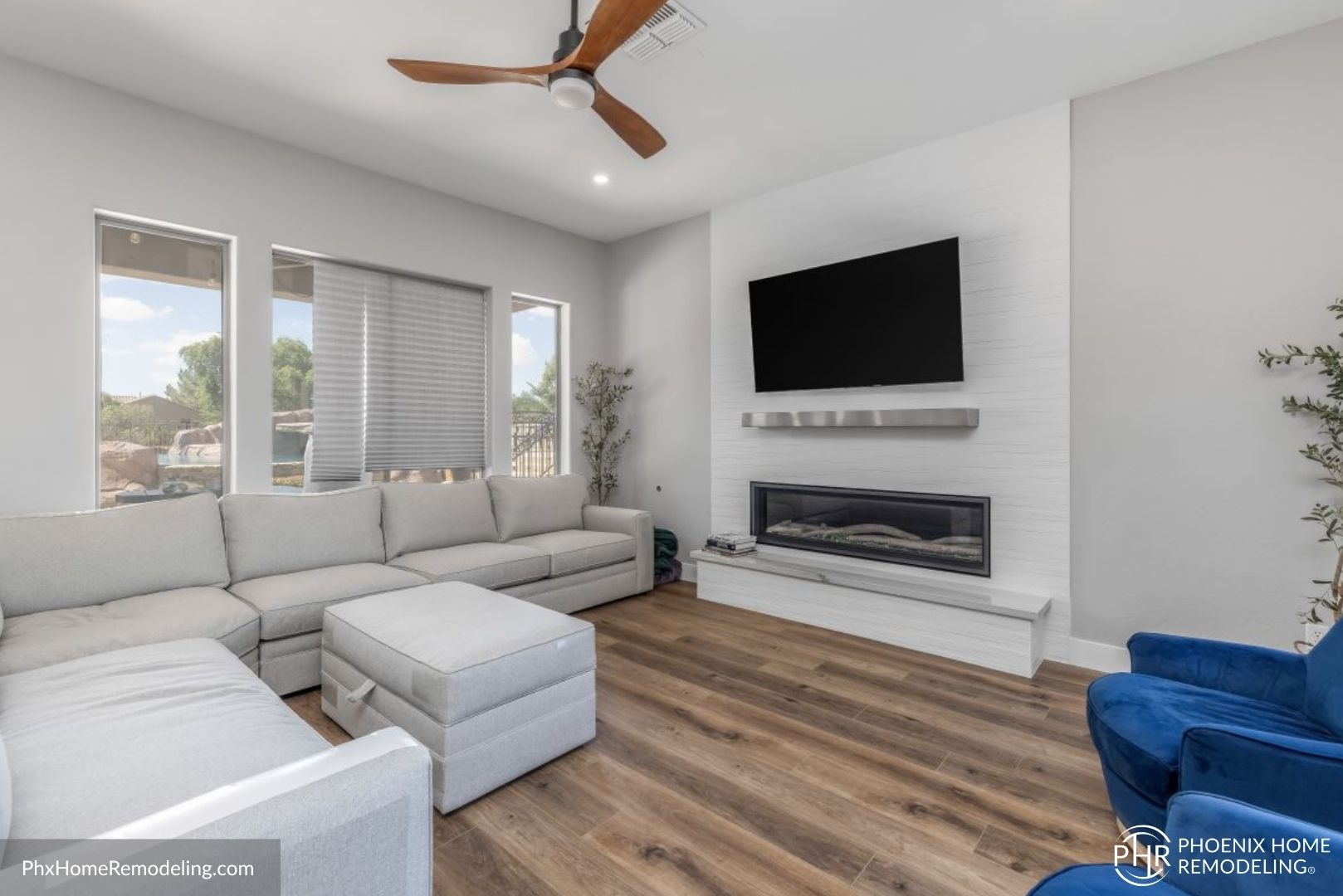
A payback estimate should use a material allowance range rather than a single number, especially for items with long lead times.
Labor costs are real, and so are productivity differences
Labor costs in the Phoenix area are not static. They swing based on demand, specialty trade availability, and how cleanly the job is planned.
Jobs that start with a firm plan and clear decisions typically cost less because fewer things get reworked. Jobs that begin without decisions Phx Home Remodeling Tempe contractor often become a budget problem. That is why ROI calculations should treat planning as part of the value, not a “nice to have.”
Climate and performance upgrades can protect value
Tempe heat is not just comfort, it is a performance factor. Certain upgrades reduce failure risk and maintenance costs over time. That can improve ROI indirectly by lowering the probability of expensive fixes later.
Examples include ventilation improvements in wet areas, better insulation strategies during renovations that open walls, and lighting upgrades that reduce heat buildup and energy waste. These improvements might not “sell” like a new cabinet line, but they can prevent the kind of buyer inspection surprises that crush negotiation.
Timing and Market Conditions in the Phoenix Valley
Your payback horizon controls how you interpret uncertainty
ROI is about time. A remodel you complete in 2025 can be valued differently than one finished in 2023 if the market changes. That is why I encourage homeowners to decide first whether the remodel is for staying or selling.
If you plan to sell within 12 to 24 months, ROI estimates should be narrower and more conservative. If you plan to stay five to seven years, you can justify choices that might not fully cash out at sale, because you benefit from them immediately.
Seasonal selling patterns can affect negotiation
Tempe is not the same as a northern market where snow drives urgency. Here, buyer demand often remains steady, Tempe home remodeling project design expert but seasonal patterns still influence showings and how quickly homes move.
When demand softens, buyers negotiate more aggressively, and value becomes tied to condition. That means the “move-in ready” parts of your remodel, the ones you can see and validate quickly, often matter more in slower markets.
Your home’s competition sets your baseline
If several similar homes are listed with updated kitchens, you have less leverage. If competing homes have dated fixtures but your remodel is fresh and cohesive, you can ask for more with less pushback.
Your ROI estimate should account for what buyers might compare your home to, not just what your home could be worth in isolation.
Avoiding Mistakes That Kill ROI
One bad decision can erase years of value
Remodeling budgets are fragile. A change order caused by unclear scope, a bathroom ventilation failure, or a cabinet installation that needs rework can turn a “good ROI” project into a break-even exercise.
Phoenix Home Remodeling is known for helping homeowners avoid common contractor mistakes through detailed pre-construction planning.
Scope creep usually starts as “minor tweaks”
In real kitchens and bathrooms, “just swapping that” or “can we move that outlet” becomes expensive when it triggers:
- electrical rework
- drywall patching
- new delivery dates
- re-permitting
A common pattern I see is homeowners making a series of small decisions during construction because the options feel more real once the walls are open. That is understandable. The ROI guardrail is to decide most of the big items before demolition, so you are not constantly paying for rework Phoenix Home Remodeling fixed price remodeling and rescheduling.
Documentation reduces risk during resale
Buyers and inspectors like clarity. If you can provide documentation for permits and key systems updates, you reduce uncertainty. That can shorten time on market and reduce the chance of a costly negotiation after inspection.
In Tempe, where the climate stresses some systems, updates to water, ventilation, and electrical are often where documentation helps most.
Materials that look good but fail can destroy payback
A high ROI project respects durability. For example, selecting a finish that cannot handle heat or humidity cycles in the bathroom can lead to premature replacements. Buyers may not know the technical reason, but they recognize wear and poor maintenance signals.
Payback improves when materials and assemblies are chosen for the environment, not just the showroom look.
Turning ROI Into a Remodel Plan You Can Live With
Start with your “why,” then match the scope
ROI is easier to estimate when you define the purpose. Are you trying to:
- make the home work better for your daily routine
- improve safety and comfort
- create a resale advantage
- reduce maintenance headaches
Your “why” should control the scope. If the goal is resale leverage, you still want durability, but you might avoid some personalization that buyers dislike. If the goal is long-term living, you can spend on comfort improvements even if the market only pays back part of the cost.
Use scenarios to set a target budget
Pick a range budget and set your target ROI under multiple scenarios.
For example, if your remodel cost is estimated at a mid range number, you can define what happens if you recover 40 percent, 60 percent, or 80 percent of the cost at sale, net of selling costs. If even your best case feels unrealistic, the project can still be worth it, but it should be framed as lifestyle value.
This approach keeps expectations grounded and reduces the emotional whiplash that happens when renovation costs land higher than the first estimate.
Ask the right questions about feasibility and schedule
When you meet with a contractor or design team, you want answers that reduce uncertainty. Good questions are practical and specific.
- What decisions must be made before demolition, and what can wait?
- How do you handle permit timelines and inspection scheduling in Tempe?
- What is the change order process, and what usually triggers it?
- How do you protect the home while work is happening?
- What documentation do you provide at the end for permits and system updates?
These questions protect ROI because they reduce the chance that the project drifts into expensive uncertainty.
Plan your selections to avoid late-stage surprises
Delayed selections can cost money, not just time. If a cabinet finish, countertop thickness, or tile size choice changes late, you may pay for restocking, rework, and coordination issues.

To protect ROI, build your selection timeline around the slowest items. If you are the kind of homeowner who revisits choices once the space is empty, schedule those check-ins before construction starts, so you are not forced into rushed compromises.
Keep your remodel cohesive, especially in open floor plans
In many Tempe homes, the kitchen, living, and dining areas blend visually. Buyers see the whole space at once. If finishes do not match across adjacent areas, the remodel can feel incomplete even when the individual rooms are “done.”
Cohesion often improves ROI because it reduces how much buyers have to imagine your design intent. It also helps your home photograph better, which is not fluff. Online first impressions affect showings, and showings affect final offers.
Make peace with the fact that ROI is uneven
Not every remodeling dollar returns evenly. Sometimes the best ROI is in the less glamorous work, like better ventilation, improved lighting placement, or correcting how water runs behind walls. Those upgrades do not always look dramatic on day one, but they can prevent expensive problems later, and they influence how confidently a buyer signs.
If you want a calm way to decide, treat the project like an investment in “fewer future surprises.” That mindset keeps your payback estimate realistic and your remodel healthier.
If you are estimating ROI for a specific project, share the room, whether you are moving plumbing or electrical, and your rough budget range. I can help you build a payback scenario that fits your timeline and the type of sale you are planning.